
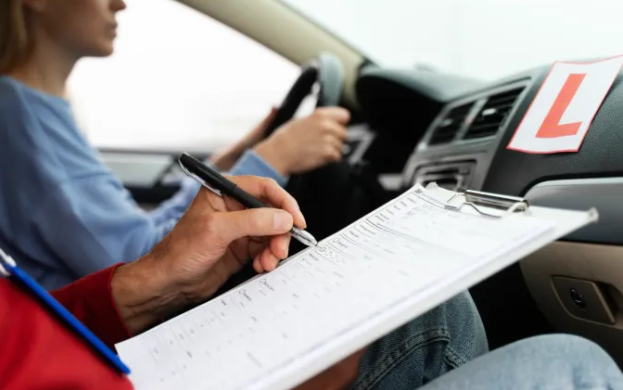

Every confident driver started somewhere small, usually in an empty parking lot or on a quiet residential street. The leap from those calm surroundings to crowded city traffic can feel enormous, especially for teens and adults who are new to the wheel. The good news is that the journey works best when it is broken into manageable stages. Each stage adds one new challenge while reinforcing what you already know. This article walks through that progression, showing how a beginner can build real skill, steady nerves, and sound judgment before facing busy intersections.
Start in a Quiet, Controlled Space
The first sessions should happen where mistakes cost nothing, such as an empty lot or a calm neighborhood street with little traffic. Here a new driver learns how the vehicle actually feels: gentle acceleration, smooth braking, steering input, and how far the car sits from the curb. Adjusting the seat, mirrors, and seatbelt becomes routine rather than an afterthought. An instructor can speak slowly, repeat instructions, and let the student practice the same movement until it feels natural. Confidence grows when pressure is low, and early confidence becomes the foundation for everything that follows.
Master Turns, Stops, and Basic Lane Control
Once the car feels familiar, the next step is controlled movement on slightly busier streets. Students practice signaling early, checking mirrors, and making smooth left and right turns without drifting wide. Stop signs teach full stops and careful observation before moving again. Staying centered in the lane, keeping a steady speed, and maintaining a safe following distance all become habits at this stage. Instructors correct small errors immediately so they do not harden into bad routines. By the end of this phase, the student handles ordinary neighborhood driving calmly and predictably.
Build Skill Through Structured Lessons
Structure matters because random practice often repeats the same mistakes. Professional bridgeport drivers training follows a clear sequence, introducing each skill only after the previous one is secure. Lessons include defined goals, honest feedback, and time to repeat difficult maneuvers such as parking and backing. Dual-control vehicles give instructors a safety net, which lets students try new tasks without fear. Parents also gain peace of mind knowing progress is measured rather than guessed. This disciplined approach shortens the learning curve and prepares students for the unpredictable moments that real roads inevitably present.
Add Intersections and Moderate Traffic
With solid basics in place, students move toward intersections, crosswalks, and roads with steady traffic. This is where right-of-way rules become practical rather than theoretical. Learners practice judging gaps, yielding to pedestrians, and reading the movements of other drivers. Lane changes are introduced carefully, with mirror checks and blind-spot glances repeated every time. Speeds increase gradually, and the instructor adds commentary that teaches anticipation, such as spotting brake lights early. Students begin to see traffic as a pattern they can read instead of a chaotic mass of vehicles.
Practice Parking, Backing, and Tight Spaces
City driving demands precise control in tight spaces, so parking deserves dedicated attention. Students rehearse parallel parking, angled stalls, three-point turns, and backing in a straight line. They learn to use mirrors, reference points, and slow, deliberate steering instead of guessing. Repetition builds muscle memory, and instructors break each maneuver into small, clear steps. Well-structured Behind the Wheel Lessons in Connecticut also cover these skills because they appear on the road test and in everyday errands. Mastering them removes a major source of anxiety before entering crowded downtown areas.
Enter Busy City Traffic with Confidence
The final stage brings the student into dense city traffic, where speed, noise, and constant decisions test everything learned so far. Instructors choose routes carefully, starting at quieter hours and gradually moving to peak periods. Students practice scanning far ahead, keeping space around the vehicle, and staying calm when drivers behave unpredictably. Highway entrances and merges may be introduced as well. Because earlier stages were mastered first, the learner feels prepared rather than overwhelmed. Mistakes still happen, but they become lessons handled with composure instead of panic.
Conclusion
Moving from quiet streets to busy city traffic is a gradual climb, not a single leap. Each stage, from empty lots to intersections, parking, and dense roads, builds the skills that the next one demands. Patience, qualified instruction, and consistent practice make the difference between nervous driving and confident driving. If you are ready to begin that journey with experienced local instructors, visit a1-driving.com to explore courses, packages, and scheduling options. Take it one step at a time, and soon the busiest road will feel manageable.